Flora & Fauna
The plants, wildlife, and natural systems that make Lake Julia worth protecting.
The plants, wildlife, and natural systems that make Lake Julia worth protecting.
Ticks carrying Lyme disease and other illnesses are present in the Lake Julia area. Check yourself, children, and pets after time outdoors — especially in wooded and grassy areas.
Lyme disease symptoms include a bullseye rash, fever, fatigue, and joint pain. Early treatment is effective — consult a doctor promptly if you suspect exposure.
CDC Lyme Disease Info →Beavers are active in the Lake Julia watershed. While they are a natural part of the ecosystem, beaver activity can affect shoreline vegetation, water levels, and drainage structures.
If beaver activity is affecting your property, contact Oneida County for guidance on management options.
North American River Otters are active in the Lake Julia watershed as well. Otters tend to more active during the day (diurnal) in winter, and more active during the night (nocturnal) for the remainder of the year. Some otters may live in solitude, but they are known to socialize in groups
Known as being playful, River otters have been known to attack humans and pets, particularly when they feel threatened, cornered, or are protecting their young.
Lake Julia supports a healthy fishery. A professional lake study by Onterra LLC (2010–13) confirmed the lake's good overall health.
All Wisconsin fishing regulations apply. Licenses are available through the Wisconsin DNR.
The forests surrounding Lake Julia were significantly shaped by the Civilian Conservation Corps in the 1930s. Today they support a rich mix of northern hardwoods and conifers.
Recommended reading: "The Social Life of Trees" — NYT Magazine, Dec. 2020 — on how trees communicate through mycorrhizal networks.
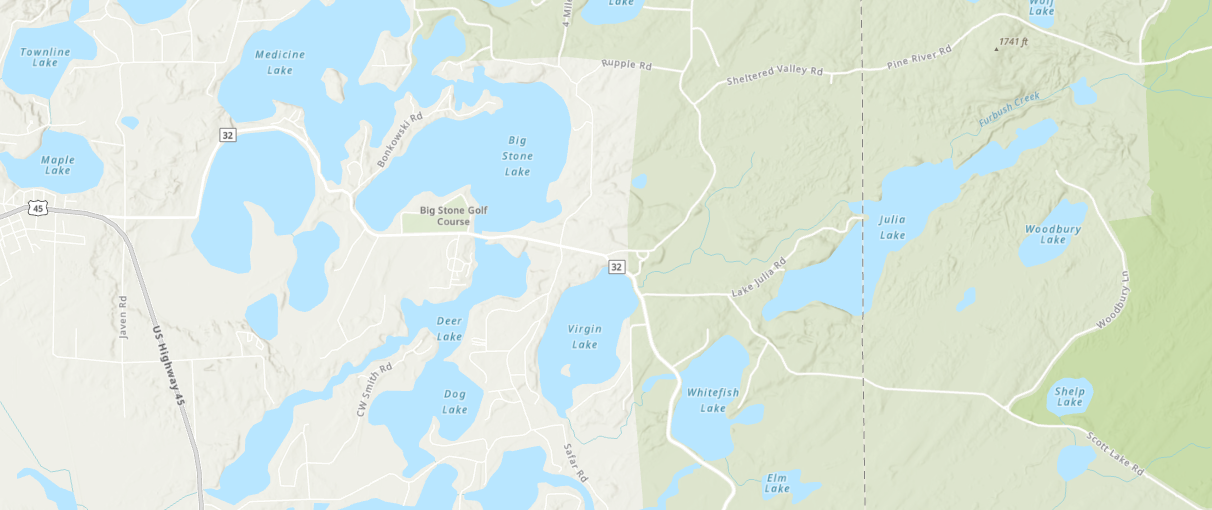
Lake Julia spans both Oneida and Forest Counties. The Forest County Association of Lakes works on water quality and lake stewardship across the county.
Visit FCAL →The Oneida County Land and Water Conservation Department (LWCD) provides resources and programs for shoreline management, erosion control, and water quality protection.
Oneida County LWCD →Shoreline Stewardship
Healthy shoreline vegetation — native grasses, shrubs, and trees — filters runoff, prevents erosion, and provides critical habitat. Consider maintaining a natural buffer of native plants along your shoreline rather than manicured lawn to the water's edge.
Avoid using fertilizers or pesticides near the water, and minimize impervious surfaces that direct runoff directly into the lake.
The Wisconsin DNR's shoreland zoning program provides guidance on best practices and regulations.